The question arrives in two forms. A café owner asks whether she needs a licence before boosting a post. A marketing manager asks whether the three creators he is about to pay for a launch need one. The answers are different, the law behind them is new, and most of what is written about it online was published before the rules changed hands in December 2025. This is the position as it stands on 18 October 2026, read from the regulator's own pages, and it is not legal advice.
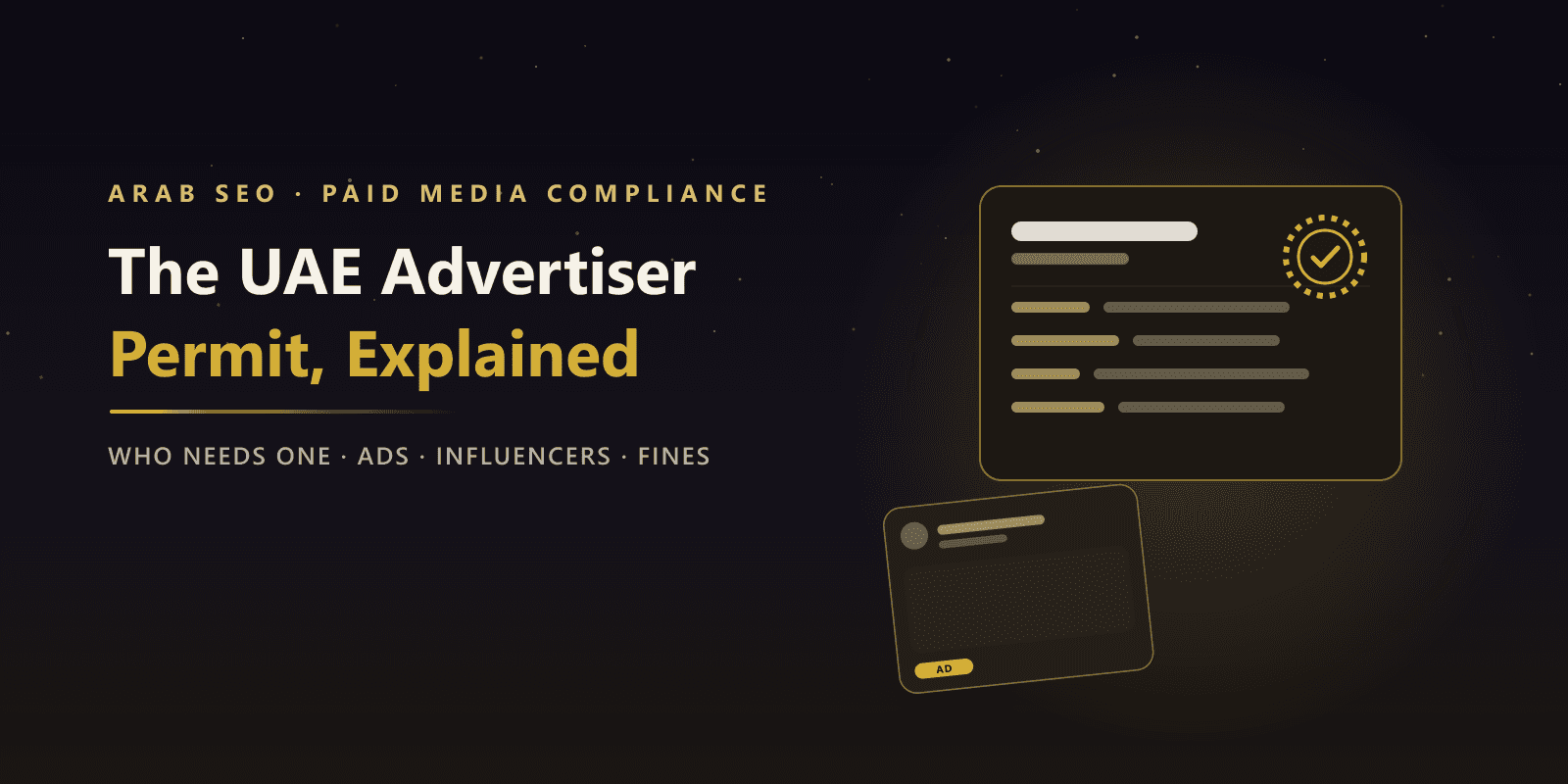
Quick answer: since 1 February 2026, anyone in the UAE who publishes promotional content on social media, paid or unpaid, needs an advertiser permit from the National Media Authority. That covers influencers, creators and anyone promoting a product that is not their own, including visitors. A business advertising its own goods under its own trade licence does not need that individual permit, but it is bound by the media content standards, by any sector permit (health, property, finance), and by the platforms' own verification, and if it pays a creator it is expected to make sure the creator holds one. The permit is free for three years and takes about three working days.
We run paid campaigns and creator programmes for Dubai businesses every week, and since February the first question on every brief has been the permit. What follows is the checklist we now use, with the sources, so that you can run it yourself.
What changed, and who the regulator is now
Three instruments matter. Federal Decree-Law No. 55 of 2023 on Media Regulation is the law, and the first in the UAE to regulate digital and electronic media expressly. Cabinet Decision No. 42 of 2025, in force since 29 May 2025, is the schedule of violations and fines. And the advertiser permit itself was announced by the UAE Media Council in mid-2025 with an October deadline, extended to 31 January 2026, after which it became mandatory.
In the middle of that, the regulator changed. Federal Decree-Law No. 11 of 2025, issued on 18 December 2025, created the National Media Authority and transferred to it the functions of the UAE Media Council, the National Media Office and the Emirates News Agency. The permit pages, the application and the public verification tool now live on nma.gov.ae. Any guide that tells you to apply to the Media Council is describing a body that no longer exists.
Who needs the permit, case by case
The National Media Authority describes the permit as one that "allows individuals to publish advertising and media content through their social media accounts, websites, or other modern digital platforms", for payment or for free. Two features of that sentence do most of the work: it is issued to individuals, and it does not care whether money changed hands.
| Who you are | Do you need the advertiser permit? | What you need instead, or as well |
|---|---|---|
| A business running ads for its own products on Google, Meta, TikTok or its own accounts | No, as the rules are reported: personal accounts promoting their own products or services are exempt, and the permit is an individual's instrument | A trade licence that covers what you sell; the content standards; any sector permit; platform verification |
| ★ A resident creator or influencer posting any promotional content | Yes, paid or unpaid, gifted products included | A commercial licence covering the activity, which the application requires |
| A visiting creator posting during a trip | Yes: the visiting advertiser permit, through a licensed UAE agency | AED 500, three months, extendable to six |
| An agency, PR firm or in-house team paying or briefing creators | Must comply: the law firms covering the rules read the obligation as extending to those who pay for or facilitate the content | Verify every creator's permit before the brief; keep the number on file |
| An employee posting about the employer's products on a personal account | Treated as promotional content by an individual; the safe reading is that it needs a permit | A written policy on who posts what, and permits for those who do |
| An agency providing advertising services as its business | A media activity licence from the authority may be required, in addition to the trade licence | Check the activity on the licence against the authority's list |
The row that surprises people is the fourth. A brand does not hold the creator's permit, but the enforcement route runs through the content, and the content is the brand's campaign. The practical consequence is simple: the permit number goes into the contract, and the authority's public verification tool is used to check it before anything is published.
The permit itself: documents, fees and timing
| Individual permit (citizens and residents) | Visiting advertiser permit | |
|---|---|---|
| Issued by | National Media Authority | National Media Authority, via a licensed UAE advertising agency |
| Documents | Digital ID, passport, personal photo, commercial licence; completion of the authority's training programme | Digital ID, passport, personal photo, commercial licence, plus supporting documents |
| Conditions | Good conduct, no felony or dishonesty conviction unless rehabilitated; no previously cancelled permit; no outstanding dues to the authority | Legally competent, at least 18, same conduct conditions |
| ★ Fee | Free for the first three years; AED 1,000 after that | AED 500 |
| Duration | Reported as one year, renewable, within the three-year waiver | Three months, extendable to a maximum of six |
| Processing | Three working days | Three working days |
| Standing condition | Published content must comply with the media content standards | The same |
The detail that stops most applications is the commercial licence. The authority's individual permit page lists it among the required documents, and Gulf News's reporting of the eligibility rules says residents must hold a valid trade licence for electronic media. A creator with no company therefore needs a freelancer or e-media licence that covers the activity before the permit application can be completed, which adds days or weeks to any campaign that assumed the creator was ready. The visiting permit page carries the same document list, with the agency route on top.
What the content has to obey, permit or not
The permit is a licence to publish, not a licence to say anything. The advertising standards under the media law, as summarised by Legal500's practice guide, require promotional content to be identified as such, require any material benefit or commercial relationship with the advertiser to be disclosed, forbid the direct or indirect promotion of alcohol, narcotics and tobacco, forbid misleading or false claims, exaggeration, claims of exclusivity and the disparagement of competitors, require respect for the country's culture and values, and tie content to the age-rating system. Every one of those applies to a business's own posts and ads as much as to a creator's.
Two points about the schedule for anyone who has only read the headline figure. The AED 1,000,000 ceiling belongs to categories a normal campaign will never approach. The category a campaign can approach is "misleading or fake content", at AED 10,000 to 100,000, which is where an unprovable "number one in Dubai", an undisclosed paid post or a before-and-after that was never that patient end up. And the licensing fines sit separately: AED 10,000 for operating without a licence, AED 40,000 on repetition, with the authority able to suspend or cancel a permit for breaching its conditions or supplying false information in the application.
The sector layer: permits on top of the permit
For four kinds of business the media permit is the second permit, not the first.
| Sector | Who else must approve | What it covers |
|---|---|---|
| Health | DHA in Dubai, DoH in Abu Dhabi, MOHAP elsewhere | Every advertisement, including social posts, and the words a clinic may use; see our DHA guide below |
| Property | Dubai Land Department (Trakheesi) | A permit number on every property advertisement, portals and social media alike |
| Finance | Securities and Commodities Authority | Anyone promoting financial products or activities must register with the SCA first; disclosure of interests and paid partnerships; no misleading or biased content |
| Education | The relevant education regulator | Approvals on claims about outcomes and accreditation |
The health rules are the strictest and the most detailed, and we have written them up separately in our guide to DHA advertising approval; nothing in the media permit relaxes them. Property advertising has its own per-advert permit regime, which is a routine part of how we run search campaigns for brokerages and the subject of its own guide. Finance is where creators get hurt: the SCA rules, as Afridi & Angell summarise them, require registration before any financial promotion and allow fines or blacklisting without it, and the advertiser permit does not substitute.
The platform layer
None of this replaces what the platforms require, and the platforms do not check the UAE permit for you. Google's advertiser verification programme, which it says all advertisers will eventually have to complete, asks for identity or business documents and pauses accounts that miss the deadline; Meta and TikTok run their own identity and business checks and their own branded-content disclosure tools. Treat them as a parallel track: the authority governs what you may publish in the UAE, the platform governs whether your account may publish at all.
The checklist before a campaign goes live
- Who is publishing? If it is the business, on its own accounts and ad platforms, about its own products: no individual permit, but everything below still applies. If it is a person, resident or visiting: permit first.
- Verify, do not ask. Put the creator's permit number in the contract and check it on the authority's verification service before the content is scheduled.
- Sector permit in hand? Health, property and finance content needs its own approval before the media permit matters.
- Disclosure on every post. Paid, gifted or affiliate, the relationship is stated in the content, not in a bio.
- Claims audit. Strike superlatives you cannot prove, exclusivity claims, comparisons that disparage, and anything the category regulator forbids.
- Platform verification current. Google's advertiser verification completed; business verification on Meta and TikTok.
- Keep the file. Permit numbers, approvals, briefs and the final creative, for the duration of the campaign and a year after.
Worked example: a Dubai restaurant launch with five creators. Illustrative. Opening in four weeks, the marketing manager has booked three resident food creators and two who are flying in from Riyadh. The resident three each hold the permit, and the numbers go into their contracts after a check on the authority's tool. The two visitors do not: their applications go through the restaurant's agency the same week, at AED 500 each, so that the three-working-day processing lands before the launch, not after. The brief is rewritten to state the paid relationship in every post, to drop the "best brunch in Dubai" line nobody can prove, and to keep the venue's shisha lounge out of the creators' content under the tobacco rule. The restaurant's own boosted posts need none of the individual permits, and all of the same content rules.
What a claims audit finds: a Dubai plastic surgery practice. Before the permit regime, an anonymised Jumeirah 2 practice we work with carried 37 claims across its site and social content that breached either Google's healthcare policy or the DHA's advertising rules. They were removed or rewritten as process descriptions, and the practice went on to grow consultation requests from 18 to 76 a month, as recorded in the PS-19 case study. The point for this guide is the number: thirty-seven, on a site nobody thought of as aggressive. A claims audit is not a formality.
What this means for your paid media
For most businesses the permit changes the creator side of a campaign far more than the paid side. Search and social ads run under the company's own licence and the platform's verification go on as before, with the content standards applied to the copy; that is how our PPC campaigns have always been written, and the standards are now a line in the approval sheet rather than a judgement call. Creator programmes, which sit inside our TikTok advertising work, now start with permit verification and visiting-permit lead times before casting is confirmed. The cost is a few days of planning. The alternative is a campaign that can be taken down mid-flight, with the fine landing on the person least able to pay it.
Frequently asked questions
Do I need a licence to run Google or Meta ads for my own business in the UAE?
Not the advertiser permit, as the rules stand in October 2026: that permit is issued to individuals who publish promotional content on their own accounts, and the reporting around the February 2026 deadline exempts personal accounts promoting their own products or services. A business advertising itself under its trade licence is still bound by the media content standards, by any sector permit (health, property, finance) and by the platforms' own verification. This is not legal advice; confirm your position with the National Media Authority or a lawyer.
Do I need a permit to pay an influencer in the UAE?
The influencer needs the permit; you need to check it. Since 1 February 2026 anyone in the UAE publishing promotional content on social media, paid or unpaid, must hold the National Media Authority's advertiser permit, and the law firms covering the rules say brands, agencies and in-house teams that pay for or facilitate that content must comply too. Ask for the permit number before the brief is signed and keep a copy with the contract.
How much does the UAE advertiser permit cost?
For UAE citizens and residents the National Media Authority lists the individual permit as free for the first three years and AED 1,000 after that, processed in about three working days. The visiting advertiser permit for people on a visit visa costs AED 500, lasts three months, can be extended to a maximum of six, and must be applied for through a licensed UAE advertising agency.
What documents does a creator need for the advertiser permit?
The National Media Authority's service page lists a digital ID, passport, personal photograph and a commercial licence, plus completion of its training programme on the rules. The applicant must have good conduct, no previously cancelled permit and no outstanding obligations to the authority. The commercial licence is the item most creators lack; a freelancer or e-media licence that covers the activity is the usual route.
What is the fine for advertising without a permit in the UAE?
Gulf News, reporting the schedule in January 2026, puts operating without a licence at AED 10,000 for a first offence and AED 40,000 on repetition, with publishing on an expired licence at AED 10,000 and then AED 20,000, doubling thereafter. Content that breaks the media standards is fined separately under Cabinet Decision No. 42 of 2025, from AED 5,000 up to AED 1,000,000 depending on the category, and the authority can suspend or cancel a permit.
Do foreign influencers visiting Dubai need a permit?
Yes, for any promotional content posted during the visit. The National Media Authority issues a visiting advertiser permit through a licensed UAE advertising agency: AED 500, three months, extendable to six, applicants aged 18 or over with the same conduct conditions as residents. A brand flying a creator in for a launch should build the application into the campaign timeline, because processing is three working days and the content cannot go out before it.
If you are about to brief creators, boost a launch or run a campaign in a regulated sector and want the permit, disclosure and claims questions settled before the money moves, send us the brief. We will tell you who in it needs what, and what has to change in the copy, before anything is published.